

Guten tag! In this delicious article, we are exploring the foods of Germany and asking the question ‘is German food healthy?’.
Of course, Germany can’t be reduced to just three foods, but for the sake of this article we are tackling some of the country’s most famous: sausages, pickles and breads.
Let’s explore in more depth.
(🎙️ If you want to listen to this article in podcast form, you will find it here.)

What is German food?
Wherever you are from in the world, you probably know Germany, which sits in Europe. It’s sandwiched by France, Poland and Austria, among other countries.
Germany is well known for its gothic architecture, sporting prowess, car manufacturing, and general efficiency in all areas of life and business.
It’s also a country with many world-famous foods. 🥨🌭
Full disclosure, I love German cuisine. Going to a German Christmas market is always wonderful. You can get a sausage – or vegan sausage if you are like me – in a bun with loads of mustard and a stein of cold beer.
Obviously, I don’t eat that kind of food all year around, but when I do, I absolutely love it.
To me, German food is robust. You always leave the table knowing you’ve eaten a solid meal.
You may agree, but I don’t think that German food has a particularly good reputation for health. Certainly not when compared to diets in Italy, Spain, Japan and other healthful countries.
However, I feel there are some benefits of eating in the German way.
So let’s go through three well-known German foods and try to determine if they are worth eating:
Are German sausages healthy?
We begin with perhaps the most famous – sausages!
Germany is renowned for its sausages.
In fact, there are said to be 1,500 varieties of sausage in Germany. This includes the likes of bratwurst, frankfurters, bierwurst, wollwurst, and pinkel.
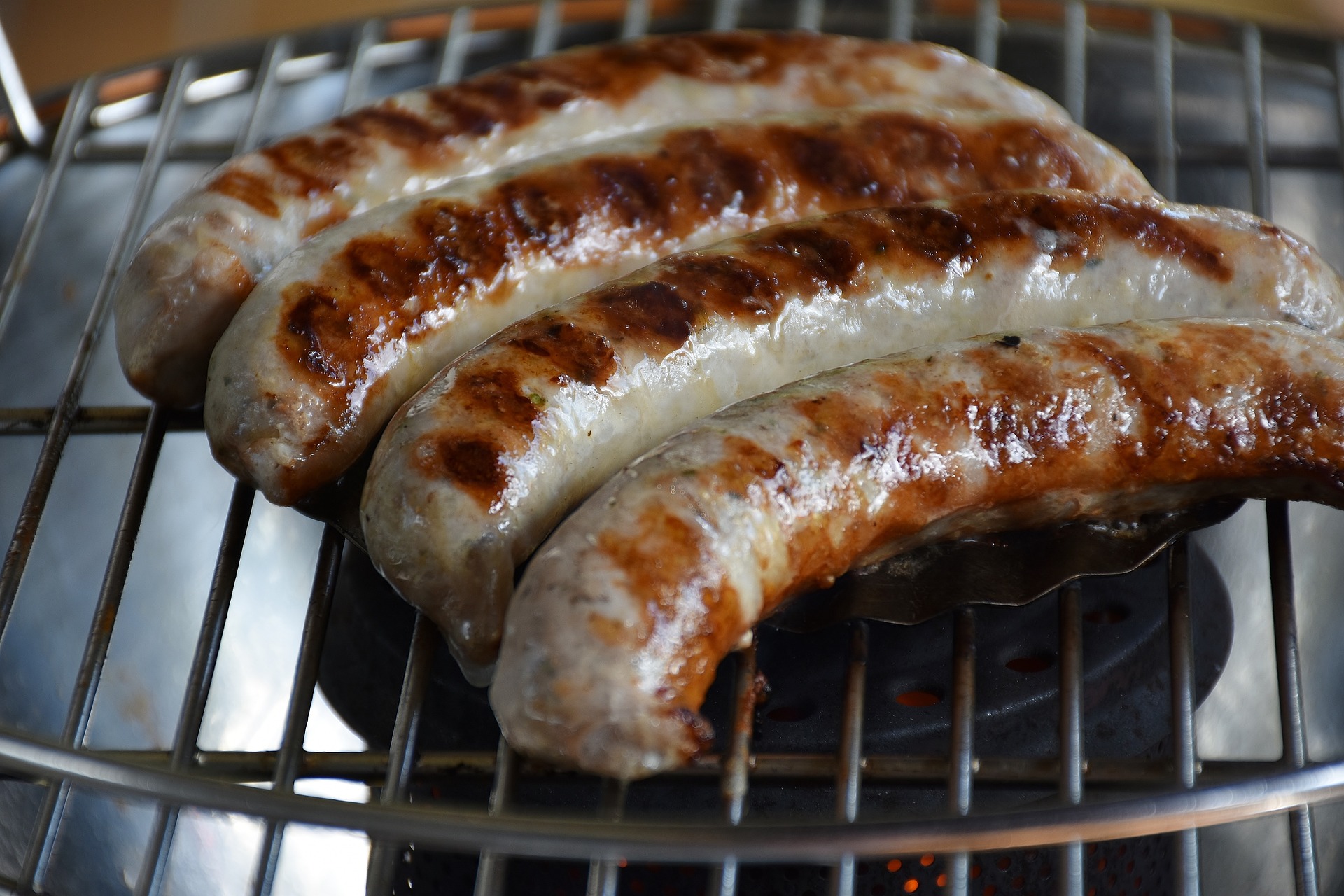
As delicious as all of this sounds, I have to spoil the party straight away.
The elephant in the room is that sausages – as tasty as they are – are made from processed meat.
Interesting fact, apparently Germans eat more processed meat per year than any other nation. That’s around 17.2kg of processed meat per person every year! That’s… a lot.
The bad news for the Germans is that processed meats including ham, bacon, salami and sausages, are classified by the World Health Organization as Group 1 carcinogens. This means that they are known to cause cancer in humans. To put that in perspective, other Group 1 carcinogens include tobacco smoking and asbestos. Urgh.
So, sausages are not great for you. That’s before you throw in all the calories and saturated fats.
However, is one sausage going to kill you?
Probably not.
(Unless you choke on it or it falls out of the bun, you slip on it and hit your head on a table).
But limiting things like processed meats is a very good idea if you want to increase your longevity.
Of course, you can always do what I do, and what many Germans do, and just go for a vegan version. There are loads of options out there. As a previous avid meat eater, I can vouch that some plant-based sausages are just as good as the real thing.
For example, soy bratwurst has become popular with Germans looking to cut meat out of their diet. Vegetarianism and veganism are on the rise in Germany, with Berlin seen as the vegan capital of Europe by many people.

Now, I’m not going to say that plant-based sausages are a healthy food, because they are still processed. Yet they are not carcinogens and are often lower in saturated fat, cholesterol and calories than a traditional sausage.
Make up your own mind.
Anyway, I think sausages was the most controversial food item on the list, so I am glad we got that out of the way!
Are pickles and sauerkraut healthy?
Next, we move onto pickles. 🥒
Just like sausages, Germans love pickles.
Germany is supposedly the largest producer and the largest importer of pickled cucumbers and gherkins in Europe. They clearly can’t get enough.

But it’s not just cucumbers – Germans enjoy pickled onions, cauliflowers, carrot, and pickled asparagus, which is known as spargel.
Another famous pickle is sauerkraut, which is pickled cabbage. I love sauerkraut – it’s so tangy and adds a new dimension to many meals.
(Pro tip: My dad adds a dash of orange juice to his sauerkraut… I’m not sure why, but it works!).
Now, call it a dish or a condiment, but sauerkraut is synonymous with Germany and a true national staple.
But…
… it’s not actually German!
It’s thought to have been introduced to the country from China. Chinese sauerkraut – known as suan cai – is thought to have originated in China around 11th century BC, as a way of preserving cabbage before refrigeration existed.
Regardless of where it comes from, sauerkraut is made by shredding cabbage, layering it with salt, then leaving it to ferment.
Writing this post, I have learned something. I always thought that you had to add vinegar to sauerkraut, but it’s simply cabbage and salt. The vinegary taste come from the fermentation, not actually adding vinegar.
(Although some store-bought sauerkrauts do use vinegar to confuse things).
If you have listened to my podcasts or read other articles on this site, then you will know that I am a fan of pickles. They are very nutritious and there are a lot of health benefits.
As such, there are plenty of reasons to eat sauerkraut.
Due to the fermentation process, sauerkraut contains probiotics, which are beneficial to your digestion and immune system. It also contains enzymes that can help your body more easily absorb nutrients.
Which is good news, because sauerkraut is packed with nutrients. Just one cup of sauerkraut contains:
- Just under 30 calories
- 4 grams of fiber
- 35% of your daily vitamin C requirements
- 12% of your daily iron needs
- A little vitamin K1 and K2, vitamin B6 and copper.
The only concern with sauerkraut is that it’s high in salt because… well… it’s made with salt.
That one cup will contain around 41% of your daily sodium intake, so if you are watching your salt levels for whatever reason, you may want to skip the sauerkraut.
However, in moderation, it’s a very healthful food indeed, and I’d be choosing to limit other sources of salt over sauerkraut.
Is German bread healthy?
Next on this delicious German list is bread.
It’s safe to say that the Germans take their breads very seriously indeed.
Some typical German breads include bauernbrot, vollkornbrot, kornstangen, pumpernickel, and laugenbrezel, which are better known as pretzels. (The big doughy pretzels, not those little hard things in a pack.)
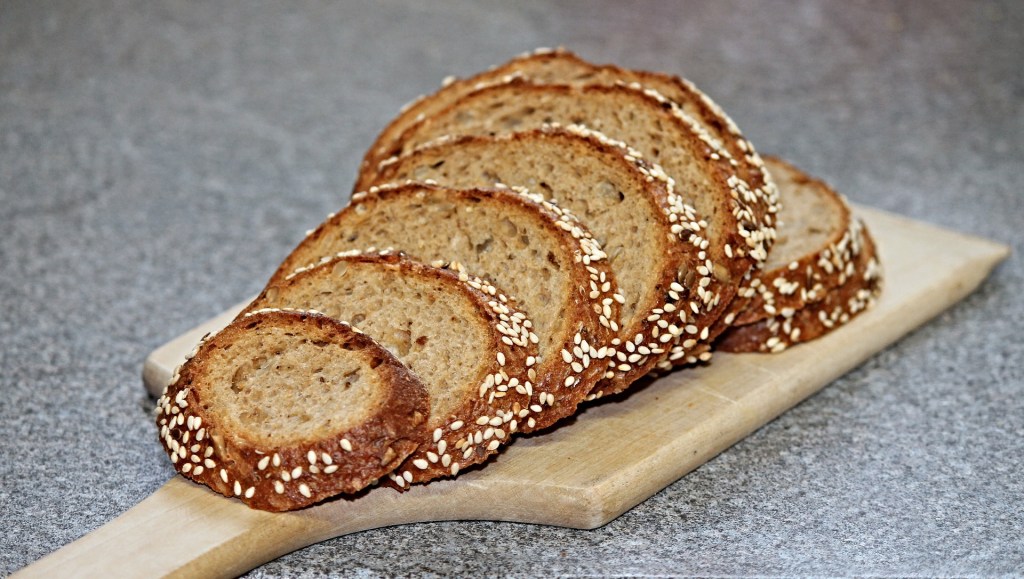
Now bread… it’s bad for you. Right?
Not necessarily!
Bread can be a great source of energy and eaten in moderation there is nothing wrong with it. I eat bread most days. However, the bread you choose makes a difference.
For example, if you go for a standard white bread, then yes, this isn’t likely to be very beneficial for you.
It’s white because the grains have been refined, stripping away the fibre and nutrients that you would find in the bran and germ of the grain. So you are basically left with the endosperm part of the grain, which is mainly starch and minimal nutrients.
In short, you will be getting a load of empty calories, with no real nutritional benefit. This is fine if you are an athlete and need a source of quick energy, but less good if you are just sitting around for most of the day.
On the other hand, a wholegrain bread contains whole grains (obviously), with the endosperm along with the germ and the bran, retaining more of those nutrients, like B vitamins and vitamin E.
So, if you eat a lot of bread, then going for something made with wholegrains is obviously a much better lifestyle choice.
This is typically what the Germans do and where traditional German breads really shine!
The thing you will notice with most of these breads are that they are dark and made with a higher portion of wholegrains like rye and oats.
Because of this, these breads tend to be higher in fibre and nutrients. They are generally more satisfying than their white equivalents because they take longer to digest.
The final word
So German food, it is incredibly tasty… but is it healthy?

Well firstly, I am aware that sausages, pickles and breads are not the sole foods in Germany!
Germans eat everything from other traditional German dishes to international foods – from pasta and pizza to pad Thai and sushi. But for the sake of this article, it was easier to focus on just three.
Of those three, sausages are obviously the worst choice.
However, if you go for a plant-based version, then you know you are making a healthier choice than one made with processed meat.
Then we have pickles, which are excellent for your digestion, while wholegrain bread is a great source of energy, with fibre and nutrients coming along for the ride.
So, next time you are in a German Christmas market, go for a vegan bratwurst served in a wholegrain bun with a large helping of sauerkraut on top and you have a pretty good meal!
(Massive stein of lager optional 🍺).
As I said, Germany is more than just a few food items and I may revisit the country in the near future where I look at the food and lifestyle in more depth. For now, I hope this article has inspired, informed or at least entertained you.
 Planet Health
5 thoughts on “What is German Food and is it Healthy?”